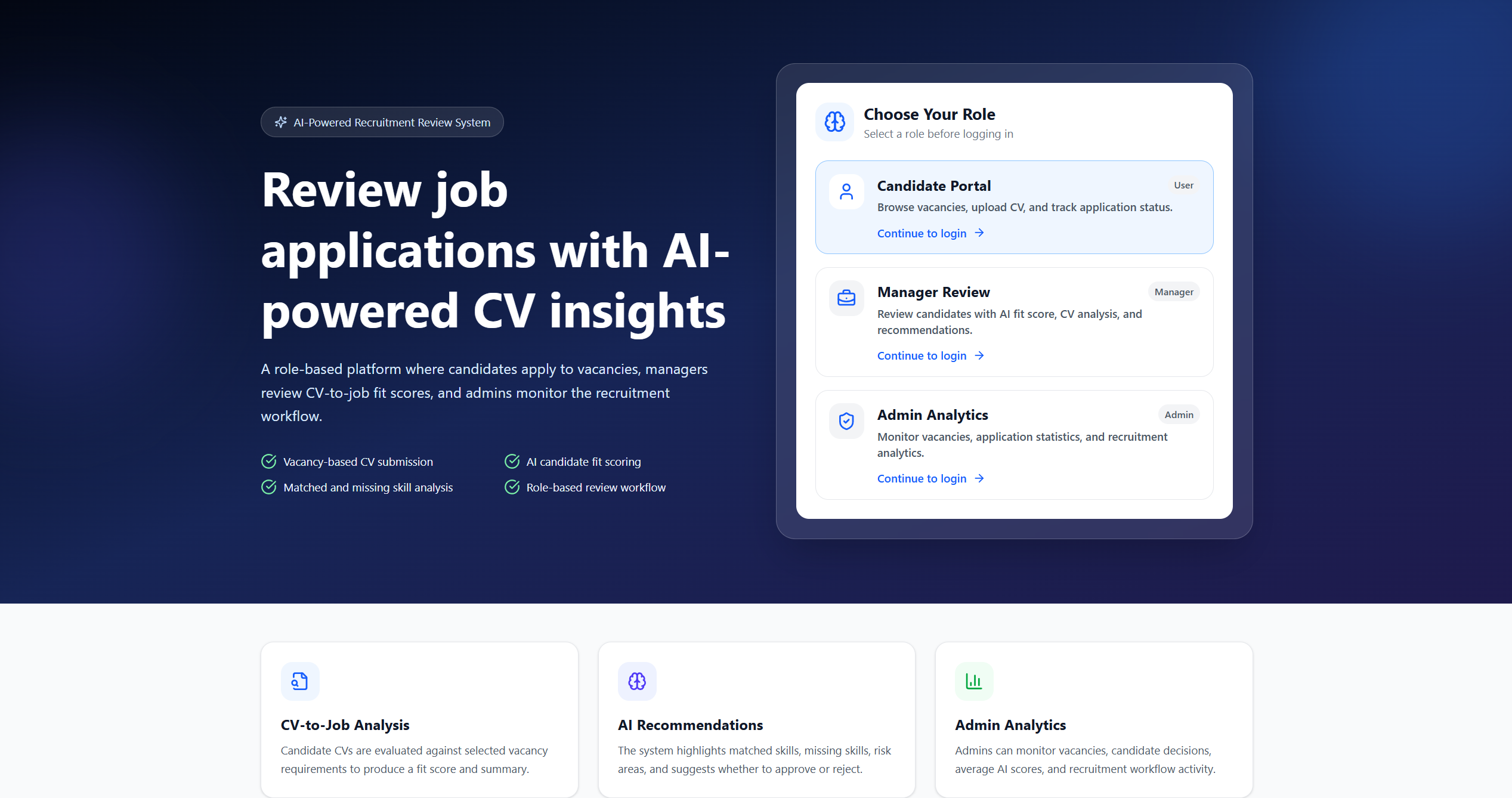
An AI-powered recruitment platform designed to simplify candidate applications, CV analysis and decision-making through secure, role-based digital workflows.
- 3
- User roles
- Full Stack
- Application type
- AI
- CV analysis
- Deployed
- Production workflow
AI Smart Application System is a full-stack recruitment platform created to improve how applications are submitted, reviewed and evaluated.
Applicants can create an account, upload their CV and apply through a structured digital process. Reviewers and managers can access candidate information, inspect applications and use AI-generated analysis to support their decisions.
The project was developed as my master's thesis and combines frontend engineering, backend development, database design, authentication, AI integration and cloud deployment.
My contribution
End-to-end development
- Product and interface planning
- Frontend implementation
- Backend REST API development
- MongoDB database integration
- Authentication and authorization
- AI service integration
- Frontend and backend deployment
01 · The problem
Candidate evaluation can become fragmented and time-consuming
- Applications may arrive through different channels
- Manual CV evaluation requires significant time
- Candidate information can be difficult to organize
- Applicants may have limited visibility into their status
- Different recruitment roles require different access levels
02 · The solution
One platform for applications, analysis and decisions
- Centralized candidate and application management
- AI-supported CV analysis and structured insights
- Secure role-based dashboards
- Clear application status tracking
- Protected backend routes and authenticated workflows
Role-Based Authentication
Secure authentication flow with different permissions and protected experiences for applicants, reviewers and managers.
AI-Powered CV Analysis
Uploaded CVs are analyzed by AI to generate structured insights and support faster candidate evaluation.
Application Management
Managers and reviewers can access applications, inspect candidate information and manage recruitment decisions.
CV File Upload
Applicants can upload their CV and submit the required information through a dedicated application flow.
Protected API Routes
Sensitive backend endpoints are secured through authentication middleware, authorization and request validation.
Application Status Tracking
Applicants can follow the progress of their submissions and view the current application status.
Frontend
Backend
Database
AI & Deployment
User Interface
React application
REST API
Node.js and Express
Database
MongoDB Atlas
AI Service
OpenAI integration
The platform needed separate interfaces and permissions for applicants, reviewers and managers. Protected routes and backend authorization rules ensure each role can only access the appropriate actions.
- Designing a complete full-stack application from frontend to deployment
- Creating reusable REST API endpoints and backend service layers
- Building secure JWT authentication and role-based authorization
- Integrating an AI service into a real product workflow
- Working with file uploads and CV-related application data
- Handling production deployment, environment variables and CORS
- Structuring MongoDB collections for users and applications
- Transforming an academic idea into a functioning digital product
Explore more work
Interested in how I build complete digital products?
Explore my other projects or review the source code behind this application.